What is a scandal bag? A scandal bag is a simple thing; it’s a plastic bag, much like the bags you would pick up at a grocery store in America. It gets the “scandal” part of its name because the bag is black, which helps ensure some privacy. Since you can’t see what’s in the bag from the outside, people never know what you might be carrying inside, and so, it became known as the scandal bag.
Where can you get them? Like in America, you can find these plastic bags just about everywhere. They come in all sorts of shapes and sizes, and every shop or store I’ve ever been to will give you one with which to carry out your goods. In America, think of how easy it is to obtain a plastic shopping bag and maintain a growing collection of them; it’s the same thing here.
Why are they important? Scandal bags are inexpensive (some stores will charge you $5J for one, which is about 5¢ in American currency) and they are easy to use. Scandal bags are also great because there about 100 different ways you can use them. In Jamaica, with limited resources, limited transportation and limited funds, Jamaicans and PCVs alike have come up with some pretty creative ways to use this bag.
How do you use them? This weekend, I polled volunteers on the island to help me compile a list of non-traditional ways they like to use their scandal bags. Below, I’ve included some of the most creative answers. Though we could only come up with 33 different uses, I’m sure there are plenty more we just haven’t thought of yet.
Arts & Crafts
Amigurumi is a Japanese crochet trend, used to make small stuffed animals and anthropomorphic creatures. The word is derived from a combination of the Japanese words ami, meaning crocheted or knitted, and nuigurumi, meaning stuffed doll.
1. Stuffing for amigurumi
2. Crochet thread/yarn
3. String for beading
4. Make a kite
5. Fill with sand for a bean bag
6. Football
7. Makeshift rope
8. Ribbon for presents
Dry Bags
9. Keep your shoes dry when walking in the rain
10. Rain hat
11. Back flap for catching dirt while riding your bicycle after the rain
12. Keep your laptop or books dry
13. Plug a leak/sink
14. Rubber gloves
15. Shower cap
16. For wet bathing suits and towels
Food Purposes
17. Attach it to your belt loop while climbing a tree to collect ackee, mango, berries, or coffee beans
18. Lunch bag
19. Cover for steaming rice
20. Store food to keep ants away
21. Does your screw-top bottle or jar leak? Use a scandal bag under the lid to prevent this.
22. Easy-to-clean-up nonstick surface for rolling out dough (for the bakers!)
23. Make-it-yourself colander for pasta
Keeping Clean
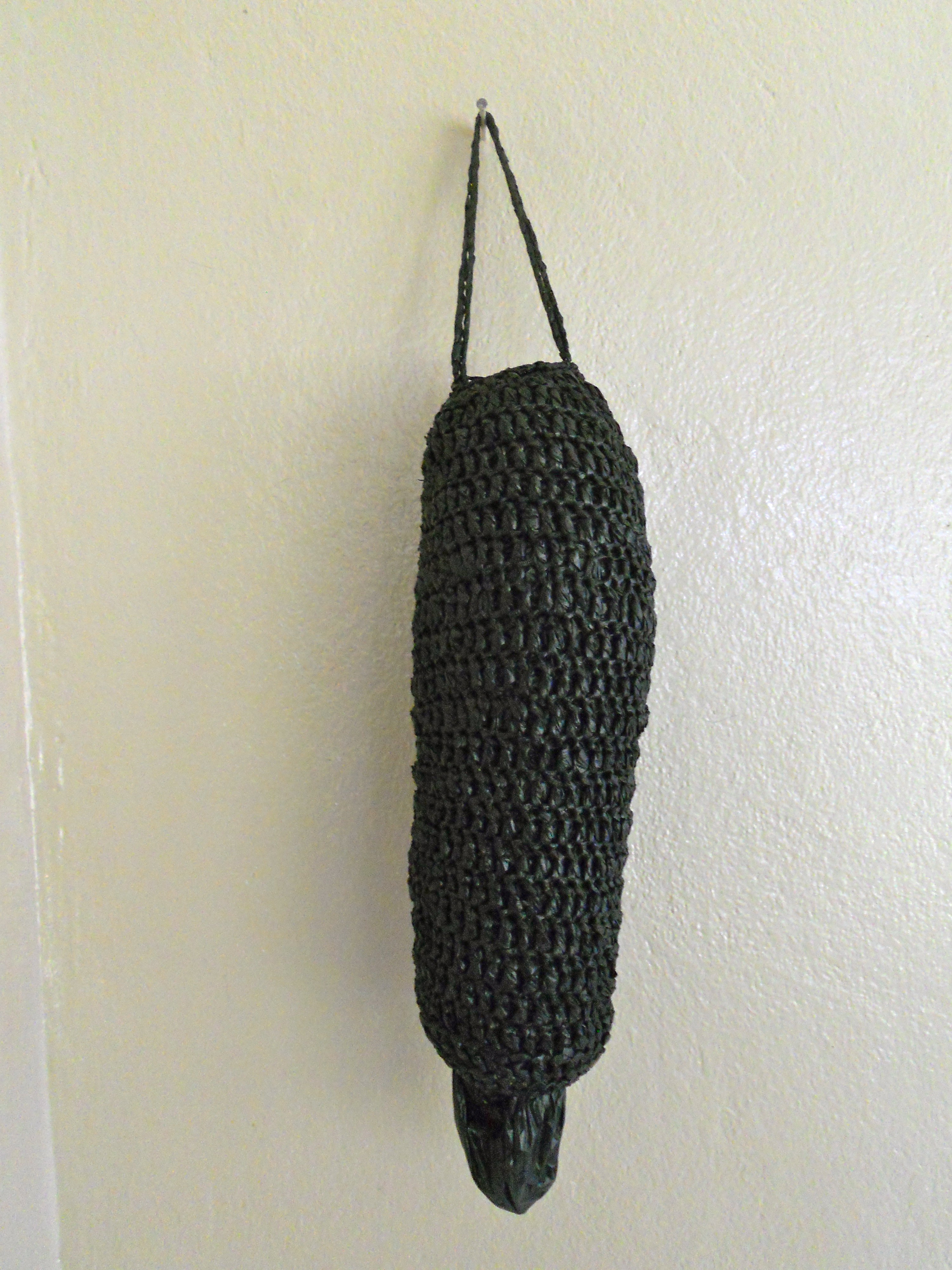
Crocheted out of scandal bags, this is an efficient way to store my over-sized scandal bag collection. Another PCV crocheted a purse from her scandal bags!
24. The ever popular, trash bag
25. Litter box liner
26. Pre-soak your whites before doing your laundry
On The Go
27. Carry a change of clothes
28. Protect bottles or creams that might explode while travelling
29. Mobile bathroom
Everything Else
30. Seedling bag for planting
31. Other storage purposes
32. Fire kindling (in desperate circumstances only, like this one)
33. Condom
In Jamaica, cats and dogs are treated with considerable difference compared to what we are used to in America. Instead of loving and adoring these pets, they’re feared or ignored completely. But the blame lies in years and years of cultural upbringing, dating back to the days of Jamaican Slavery. Dogs, you see, were used to keep slaves in line, and cats are the source of a large number of superstitions. Today, most Jamaicans pay little mind to our four-legged friends, but if you were to ask them for their thoughts, they’d tell you that they are afraid of them.
Lately, however, small changes in attitude have been made, and Jamaicans are slowly beginning to appreciate these animals for what they have to offer. Dogs are kept in the yard to protect the house and eat the scraps, and cats are kept around for mouse-ing purposes. Most surprisingly, there are a few Jamaicans who DO love their pets and spoil them like we do.
Understanding this cultural apprehension is important when considering the next part of my story.
Sometime during the summer, I was having a conversation with a Jamaican friend and I mentioned that I wanted a kitten. To my utmost delight, he declared that his cat recently had kittens and he’d be happy to give me one. They were born about a month ago, he explained, so in another month, they’ll ready to leave their mom.
I was elated. I’d found myself a kitten, and six weeks later, he calls me to tell me he’s ready to find them good homes. But first he had to catch them. It took a few more days, but I finally got the phone call I’d been waiting for. “Mi catch di puss, finally! Mi a bring ‘im now.”
When at last his car pulled up in front of my house, I hurried outside to greet him. He was standing at the trunk of his car, untying something, then quickly thrust the kitten into my arms. Tiny, wet (it had been raining for days), and terrified, this little kitten was handed to me with claws bared, fur on end, and hissing. It also had a shoelace tied around its neck. I knew this was to keep the cat from running, but it wasn’t until I tried to hug my friend, who quickly backed away, that I realized what was really happening. The poor man was just as scared as the kitten, and the kitten was feral.
———————————————————————— Feral is a word used to describe a cat who has never had human interaction. After a certain age, this is irreversible, and feral cats who are forced into human contact will become aggressive and vicious.
———————————————————————-
The first four days with Kitty were a nightmare. He wouldn’t eat, wouldn’t come out from hiding, and cried all night, keeping me awake. At one point, he ended up behind my dresser, climbed into a drawer, and got stuck there until 5:30am, which is when I finally found him. I also realized that he hadn’t been properly weaned from his mother, which was why he wouldn’t eat, and was probably starving. This required fishing him out, suffering tiny claws, and making him eat some canned tuna. It only took me one try before he learned that he enjoyed eating, and everything went uphill from there.
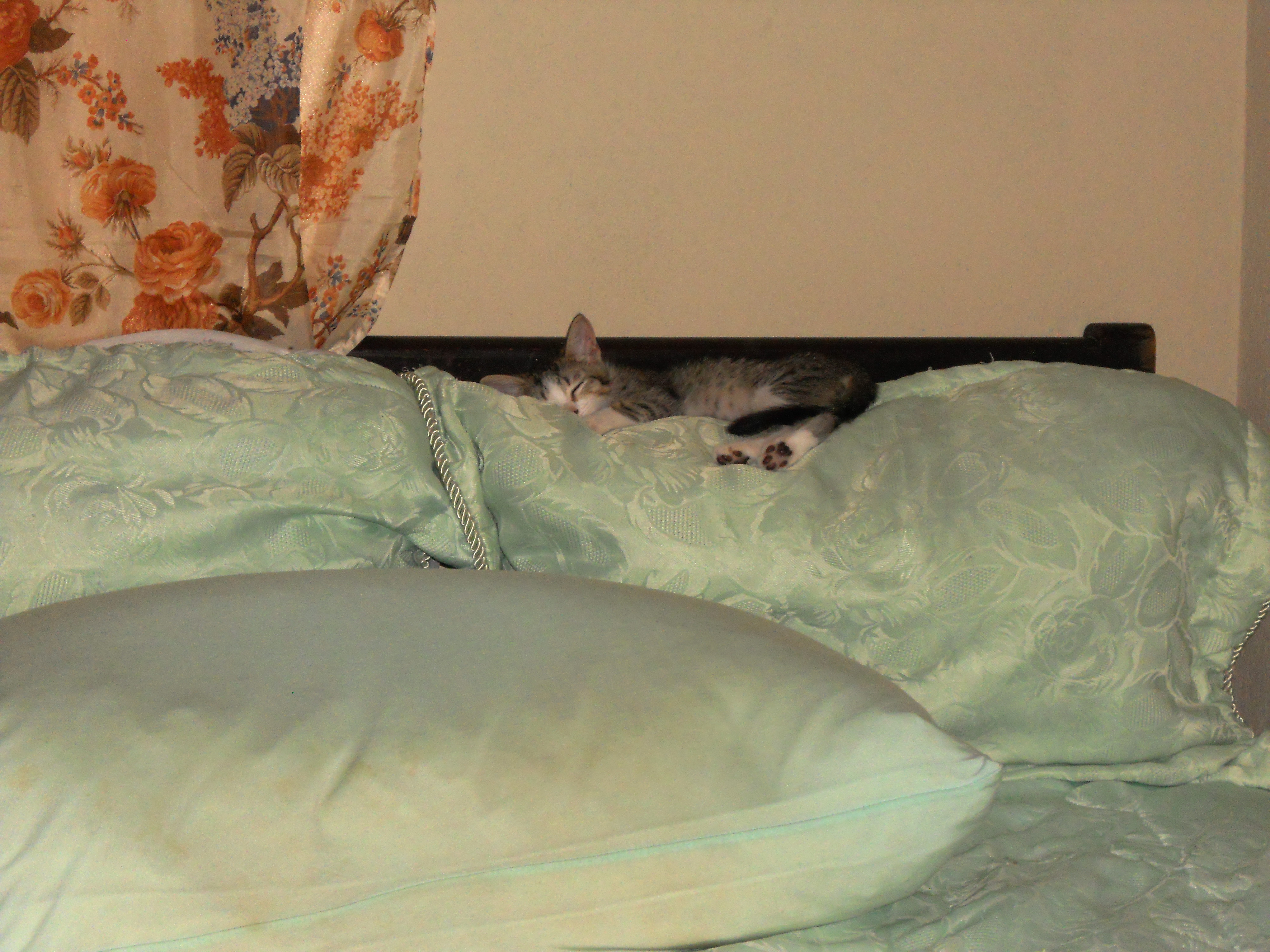
On Friday, I had the house to myself, and in the quiet, Kitty came out from hiding. Skittish though he was, he wanted to remain in my sight, cried when I left the room, and would periodically wake up from his much needed nap to make sure I was still there. That night, as I fell asleep, Kitty settled in on top of a large pillow against my headboard, scant inches above mine. He stayed there all night, and it is now one of his favorite spots to doze.
Bowser, from Super Mario Brothers
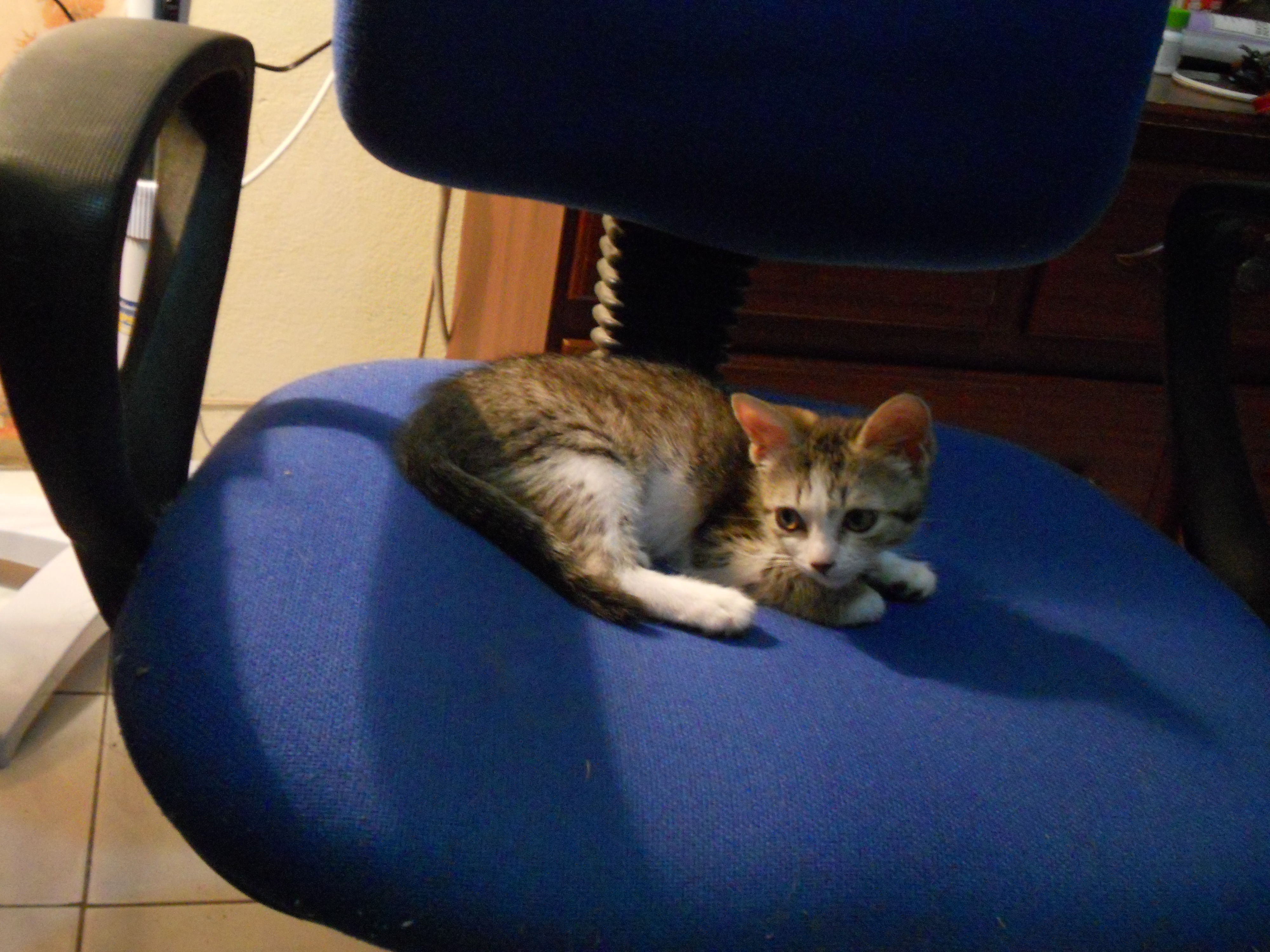
Within the next week, much happened. Kitty rolled over enough times, allowing me to finally determine his sex and name him Bowser. And if you’re at all familiar with this fella (pictured left), then you’d understand when I tell you that Bowser is an incredibly fitting name.
Having a kitten is like having a toddler, and this little furball is exceptionally troublesome. He gets into everything, plays in his litterbox rather than use it for its intended purpose, and continuously tries to climb the curtains. I have to make sure to secure all my electrical cords before I leave the room and hide anything he might break.
But he’s just so cute!! The day he discovered his tail was particularly entertaining to observe, and when I’m not paying attention, my toes are victim to pounces. Naturally curious, he likes to watch me in the mornings and evenings as I move about my room getting dressed or undressed, and he’ll sleep curled up with me at night.
Unfortunately, I’m still not allowed to touch him. If my hand comes anywhere near him, he’ll back away or hiss. He’s territorial about his food and likes to pee on my bed.
After three days of using his litterbox properly, I decided it was safe to leave my jeans on the bed. I was mistaken.
Everyday, however, Bowser improves. In the mornings, he’ll pounce my fingers as he would my toes, and he’s taken to exploring beyond the confines of my room. A loud bang will still send him into hiding, but he’s not as timid as he used to be. Luckily, pooping in the litterbox isn’t an issue, but burying it is, so air fresheners have become my new best friend.
Over the next few weeks, I’ll be picking him up whether he likes it or not, and petting him and scratching behind his ears until he figures out that he likes it. I’m not okay with having a cat that I can’t hold or pet.
And if you’re wondering if this cat will be coming home with me in two years, that has yet to be decided. When Bowser gets a little bigger (and a little more normal with me and my host mother), I’ll begin letting him outside to explore, like most other Jamaican cats. If he loves the outdoors and never wants to come in, then I’ll consider letting him stay. There would be nowhere in America I could bring him that would compare to the wild outdoors that is Jamaica. If, however, he prefers to stay inside and becomes the lovebug I hope he’ll be, then we’ll have another option to consider.
For now, I am experiencing a brief taste of motherhood, as I watch him destroy my room, pee on my jeans, and keep me awake at night because he thinks it’s playtime. When I’m at school, I’m fretting over what kind of mess I’ll come home to find. No, he can’t draw on my walls with crayons, but sooner or later, I’m convinced I’ll come home to find something broken, or spilled, or knocked over and peed on.
When he’s not busy getting into trouble, he’s snoozing in his favorite spot
After seven months in Jamaica, and five of them as a volunteer, it is only now that I am able to begin what I came here to do. And because I spent the first three weeks planning, I was able to jump straight into my lessons after ESC.
Regardless of my preparations, I was still swamped under a ridiculous workload. My week consists of meeting with each group twice, taking into account planning between sessions, school-wide schedule changes (like an unexpected early dismissal), and reminding teachers of which students to send and at what times. To top it off, even though I’d made a decent set of activity sheets for each lesson, I didn’t remember to label them properly, and returned to school with a mess of my own making to sort out.
My first week was exhausting. And because every class did the same thing for the first lesson, I felt like a broken record by Thursday. Luckily, my schedule allowed for a Friday without students, so I was able to get some more planning work done, and then spend the weekend on hiatus.
Meanwhile, week two (the week we are currently in) picked up at a great start. Most of my students behave well enough, and lessons, for the most part, are going as planned.
But adjustments always need to be made, so flexibility is a major part of the job. I’ve already scouted out some potential changes to my groups and have had to make some alterations in lesson plans. Additionally, I’ve been able to iron out a couple of small details to help make my life easier, like giving each child a post-it with their days and class times on them, and asking them to help remind their teachers that they need to come see me. This, at least, eliminates my need to constantly remind or come fetch my students, and it provides them with a feeling of responsibility.
This week also marks the beginning of my Reading Club, which is held after school on Thursdays. Due to limited resources, and because asking children to read additional pages might pose as a challenge, the Reading Club consists primarily of games to help reinforce the fundamentals. Some of the materials I’ve made for my students turned out to be perfect for this. Things like Sounding-Out Dominoes or Rhyming Bingo, Matching (or Memory) with uppercase and lowercase letters, and even introducing Hangman was a great success. I’ll continue with this club for a few weeks, and then try something new. I have an idea for a Writing Club, and another idea for a Study Hall, which, if all goes well, has potential to evolve into something bigger and more permanent.
One of the teachers at school has also noticed some of the materials I’ve made, and has requested help with some materials of her own to help her struggling students. She understands the importance of reinforcement through repetition, and hopes that these students (I have six from her class) can continue to improve on their reading even outside my classroom. This teacher and I have partnered together for our Reading Club, and she will lend a tremendous hand with my Library Improvement Project.
Speaking of projects, the school has voiced its desire for a computer lab, and since ESC was partially about secondary projects, I will begin the plans for that as well. I’ll be working with the teachers, ancillary staff, and other members of the community to help establish a functioning computer lab with Internet, as well as incorporating a computer class into the curriculum. Of course, all these things take time, so when there is an update on my projects, I’ll be sure to include it.
All in all, despite how much I am already accomplishing, there still seems to be an endless to-do list, both at school and in my personal life. My bedroom floor is in desperate need of a good sweeping, I’m overdue for a load of laundry, and busy tracking down missing care packages or arranging for those that have arrived to be picked up or delivered. I’m keeping up with friends back at home through Skype, email, Facebook and my blog, and making Halloween plans with PCV friends around the island. Let’s not forget my dedication to lose the weight I put on during the summer. That includes a regular workout routine, and the necessity to stop being lazy and actually cook myself a decent dinner. Which, if we’re being honest, hasn’t happened yet this week.
The Sixth Grade girls drew this for me(left) Letter Tiles, (right) Sounding Out Dominoes
This blog post was written by another Jamaica PCV, about our Education Sector Supervisor, whose life was touched at a young age by, not one, but two Peace Corps Volunteers. I found this entry to be beautiful, inspirational, and motivating. It was imperative that I share it with you. I hope you enjoy it as much as I did. Thanks, Michelle, for supplying us with this gem. =)
Introducing: Sue W. A gifted child, Sue grew up in a community where she and her mother were taught by- and interacted with- a number of Peace Corps Volunteers over the years. If I remember correctly, she later befriended a Volunteer who, now returned to the States, is her best friend. Sue is a trained Jamaican teacher but she also started working part-time with Peace Corps as a community liaison or a Language & Culture Facilitator when volunteer training groups came to her town. Eventually she was promoted and is now in charge of PCJ’s Education sector, which makes her my supervisor.
Sue’s Story (transcribed from a video) Where I come from, we’ve always had Peace Corps Volunteers. So, my mother was taught to sew by a volunteer in the 60’s when volunteers were focusing on vocational work. And as a result of that, my mother was able to make…
 What is a scandal bag?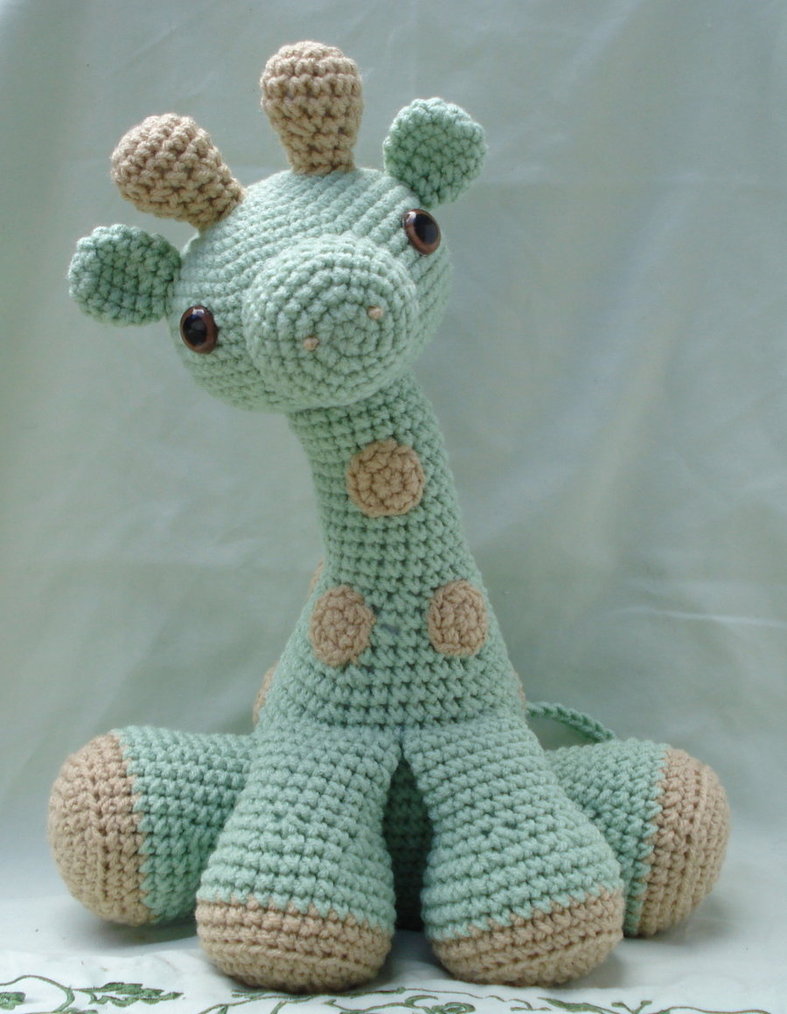







 The Next Chapter